Interactive prototype
Message Match
An AI-assisted review that traces differences between an ad’s promise and the landing page back to visible evidence.
The worked example pairs an ad offering a free start with a landing page asking users to book a personalized demo. The report shows the sources for both.
Open Message Match to try the example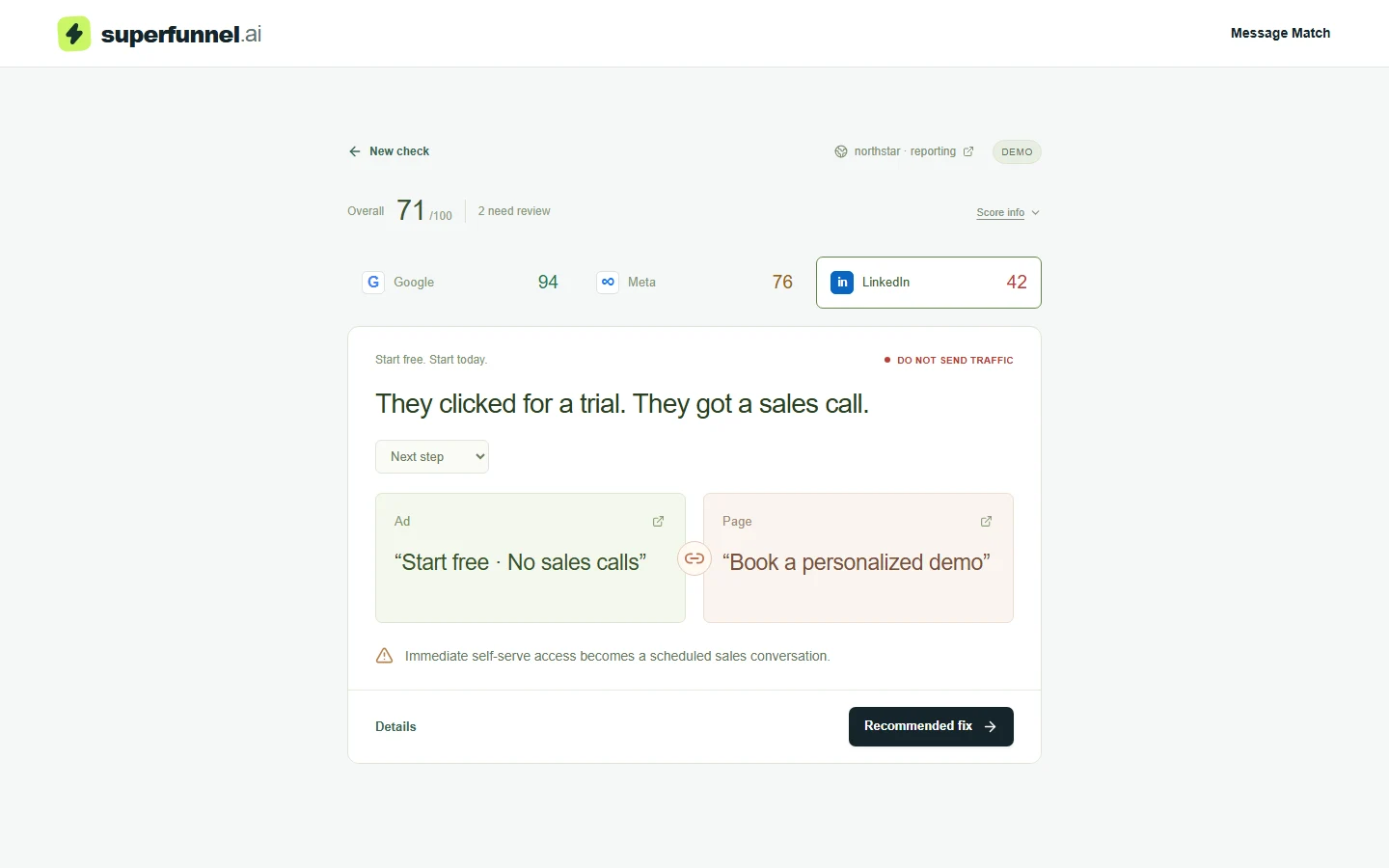
The problem
An ad can invite visitors to start a trial and then send them to a page that asks them to book a demo. That change in next step is easy to miss when campaigns and pages are reviewed separately.
Why it matters
Paid media and landing-page teams need a shared reference for what the customer was promised. A mismatch can create friction and make it harder to decide whether the creative or the destination page needs changing.
My approach
I built the review around an ad, a page, and a specific recommendation. I kept the evidence next to the judgment so a reviewer can see why the recommendation was made and decide whether to use it.
How I built it
The Next.js app accepts a landing-page URL and up to three ad creatives. On the live-analysis path, the Node route checks sign-in and validates inputs. Playwright captures visible copy and a screenshot. Gemini returns a structured comparison. Application code checks the report structure, validates quoted text against captured or supplied text where applicable, and enforces scoring rules before rendering the report.
- Ad and page inputThe Next.js form collects a destination and ad creative. The live route checks sign-in and validates the input.
- Browser evidencePlaywright captures visible copy and a screenshot from the landing page.
- AI comparisonGemini evaluates the ad and page evidence and proposes a structured review.
- Report checksApplication code validates the response, checks applicable quotes, and presents the evidence and fix.
How I used AI
I used Codex during development and QA. Gemini is also part of the product’s live analysis. It proposes interpretations and fixes, while browser capture supplies page evidence and application checks validate some claims. A reviewer still judges whether a recommendation fits the campaign.
Challenges and learnings
QA found that returning from Details could show passing evidence beneath a mismatch headline. I narrowed the overview to checks relevant to the selected mismatch and added a browser regression check. A separate synthetic live test also produced plausible but unsupported explanations, which made it important to keep the underlying evidence visible.
Evidence
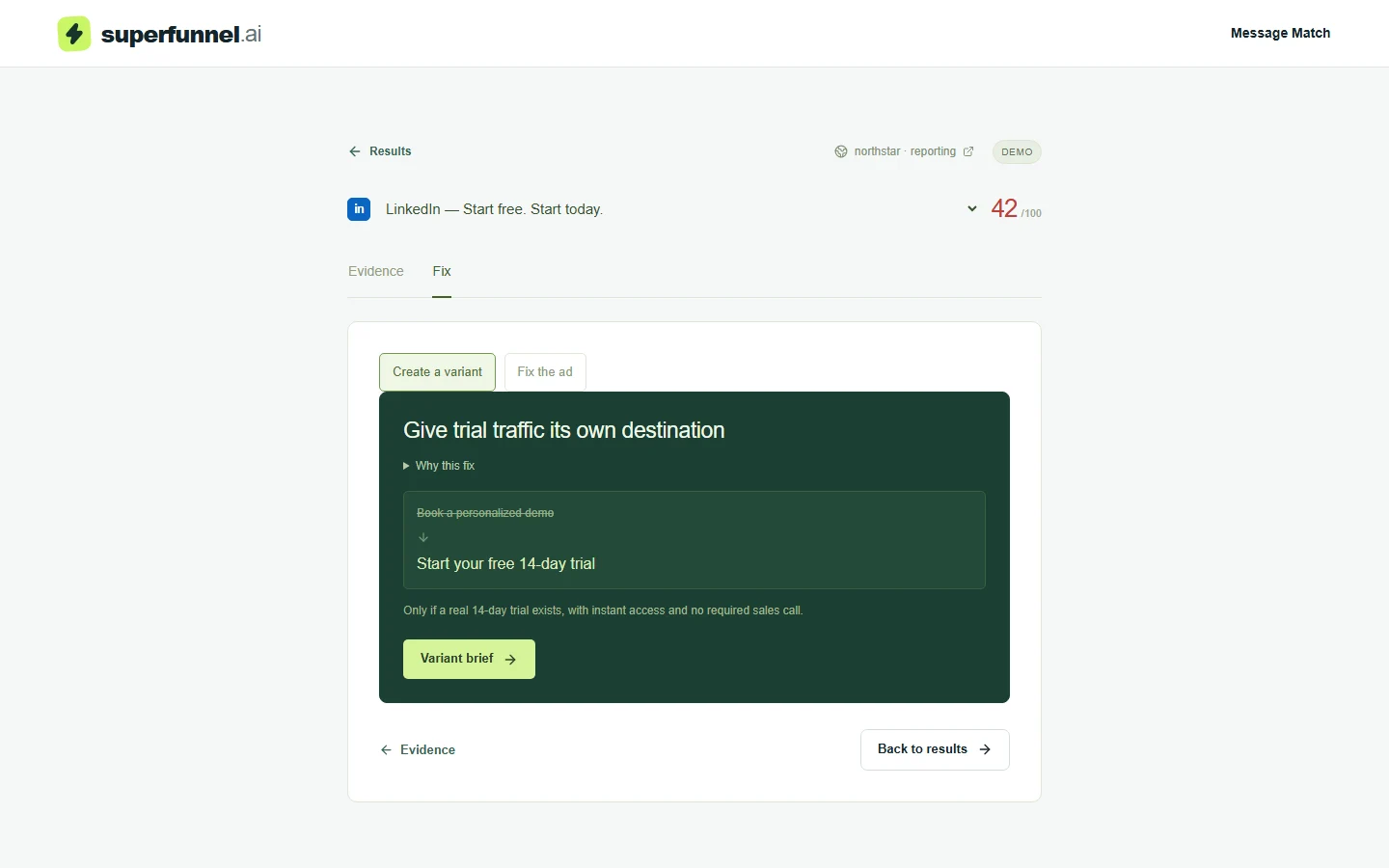
The public worked example displays the mismatch, evidence, and recommended fix. The project QA report also records a historical live test with synthetic ads and documents where the model explanations needed review.
Current status and next steps
The public worked example is available. The reviewed live-analysis code requires a signed-in session and a configured provider. The demo does not require a fresh model call.
Next step Build a reviewed set of ads and pages with expected findings, then evaluate quote accuracy and recommendation usefulness before relying on scores across campaigns.