Working public demo
Funnel Preflight
A browser test that checks whether a lead funnel and its conversion tracking are ready for paid traffic.
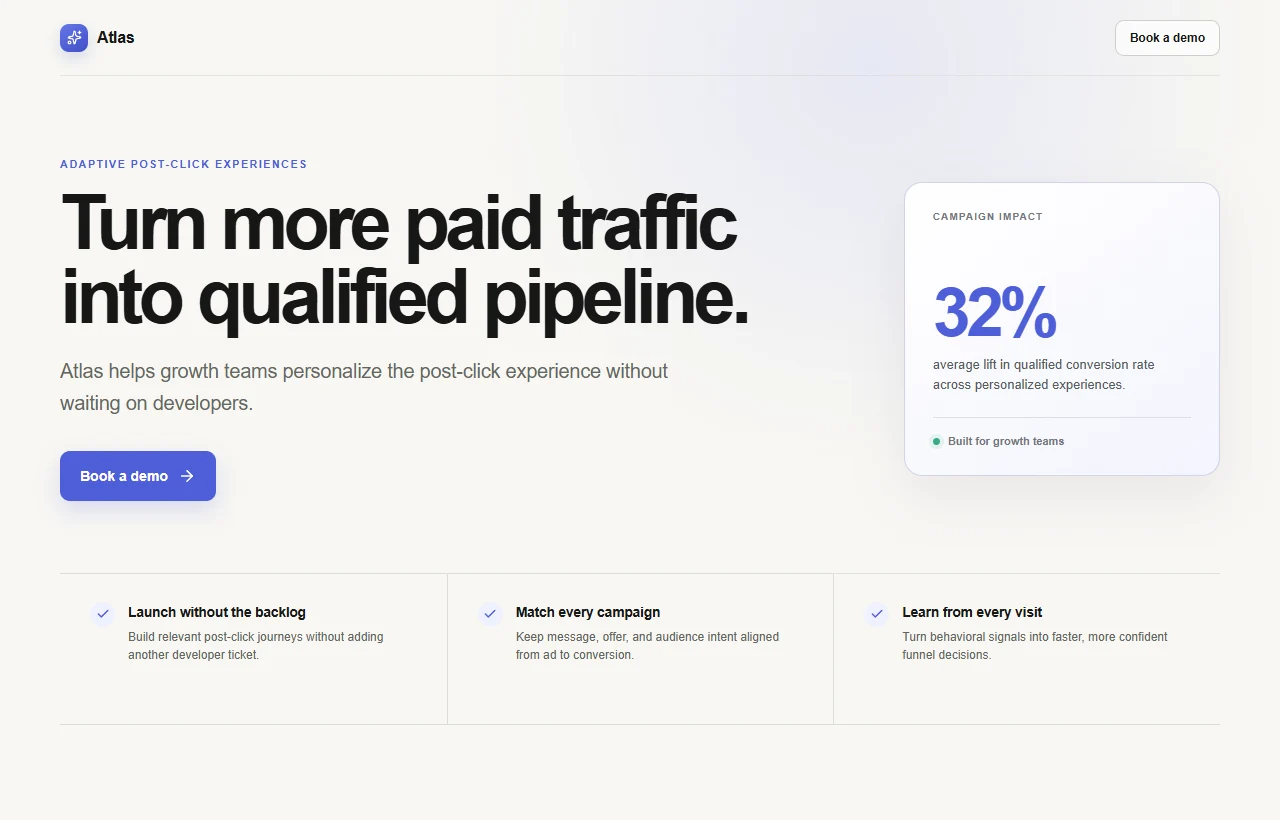
The Atlas form passed. The verdict was HOLD TRAFFIC because the browser detected no generate_lead event after submission.
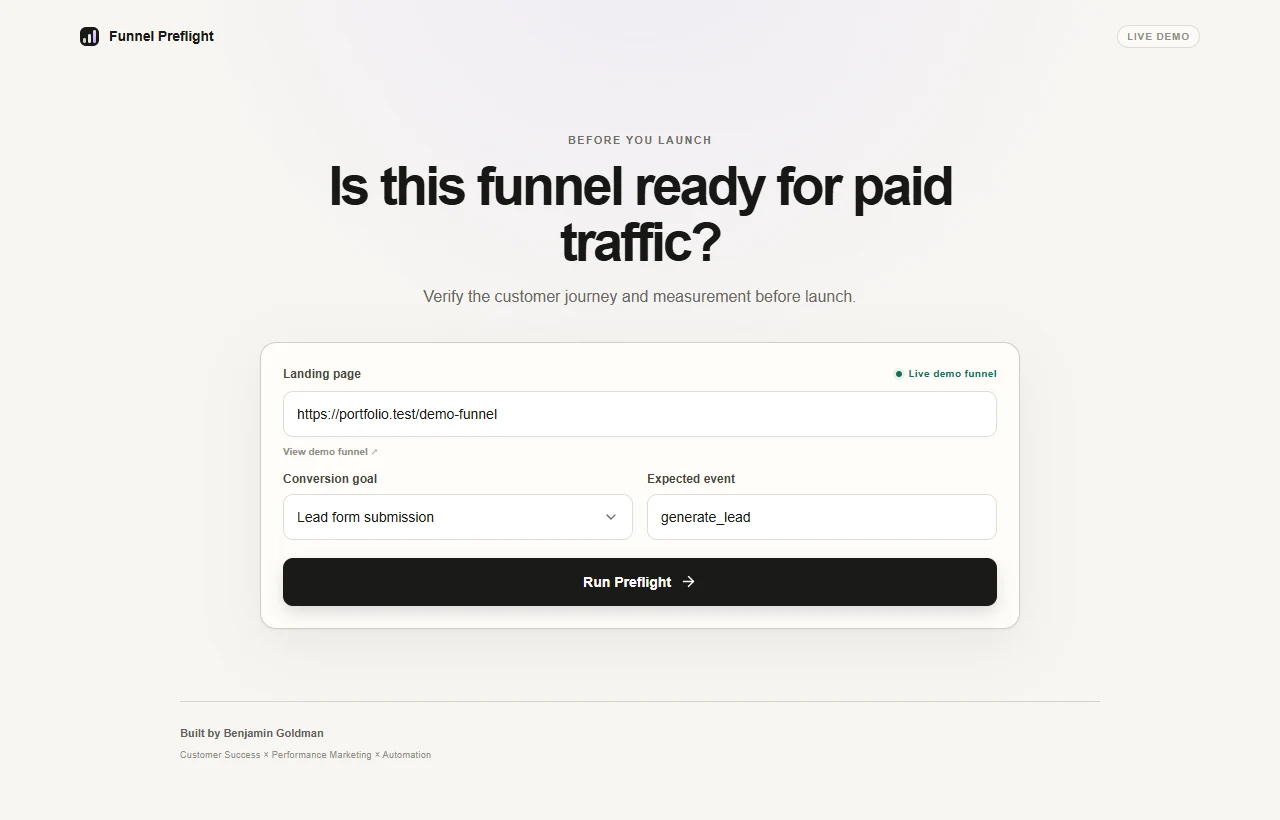
Run the Atlas demo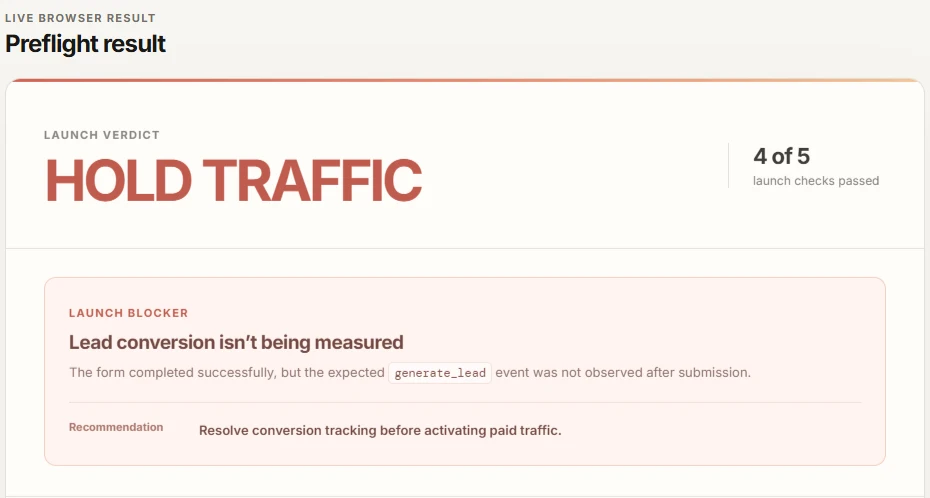
The problem
A form can work for a visitor and still fail to record a conversion. A prelaunch check that ends at the thank-you screen can miss that failure.
Why it matters
Paid media teams use conversion events to report performance and make budget decisions. A missing event can leave the team unable to tell whether the campaign is producing leads, even when the form is accepting submissions.
My approach
I wanted one repeatable launch check that follows the visitor’s path and checks the measurement separately. I scoped the demo to a known funnel with a deliberate tracking defect so the verdict could be tested against a predictable outcome.
How I built it
I built a React and Vite interface backed by a Node endpoint. Playwright opens Chromium, checks the desktop and mobile page, submits the demo form, and inspects browser-side analytics. The endpoint streams progress from the runner as newline-delimited JSON. A completed run supplies the evidence and verdict for the report.
- Launch criteriaThe form sends the Atlas URL, conversion goal, and expected event.
- Browser checkPlaywright checks the page and mobile layout, submits the form, and observes analytics.
- Decision and reportThe check results drive the launch verdict and shareable report.
How I used AI
I used Codex to implement and iterate on the runner, the progress display, and the report. The browser observations and explicit checks determine the verdict. No language model grades the funnel.
Challenges and learnings
A progress indicator was useful only if it reflected what the browser had actually checked. I iterated on the interface to show events emitted by the runner. The Atlas demo also made the distinction between a working form and working conversion tracking visible in the report.
Evidence
In the public test on November 16, 2026, the page, mobile layout, form submission, and browser-side analytics passed. The expected generate_lead event failed. Run the same demo and read the failed check in context.
Current status and next steps
The public demo runs against the bundled Atlas funnel. The checks cover signals visible to the browser.
Next step Extend the check to approved funnel fixtures with different form behaviors and event setups.