Client contribution
ReplyFlow automation activity
A rule activity log that helps operators see why a follow-up ran, was skipped, or failed.
I added an unconfirmed outcome for actions that returned without a task ID. The local preview shows sample rule activity.
Visit ReplyFlow’s website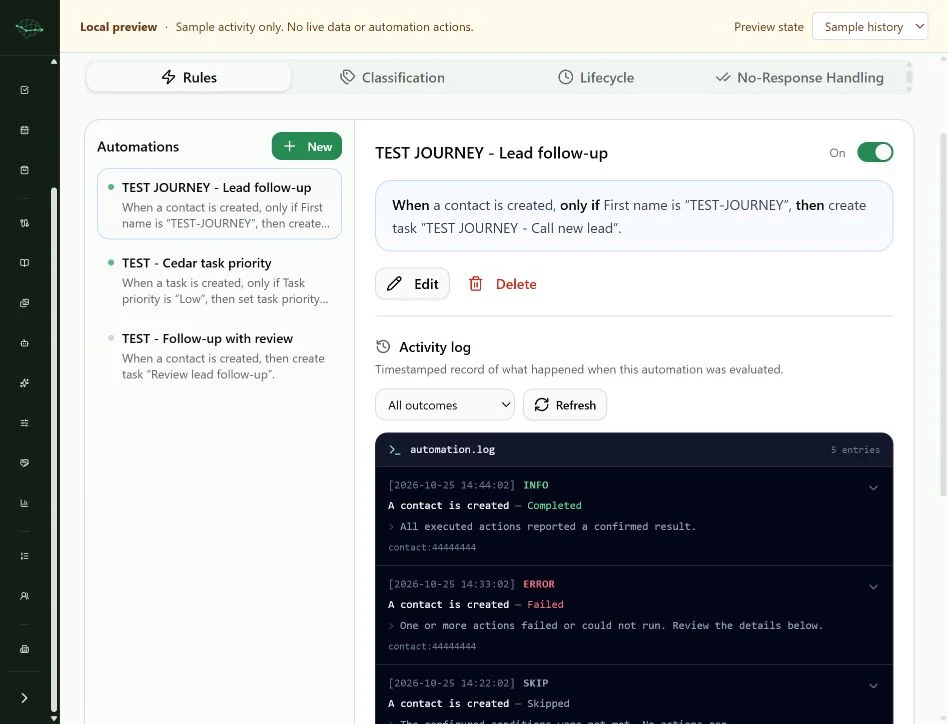
The problem
A saved rule showed its configuration, while operators had limited visibility into what happened after a trigger. When an expected follow-up was absent, the rule screen offered little help tracing the decision.
Why it matters
Customer operations and support teams need to explain missed follow-ups and identify where to investigate. A filterable history narrows the search and helps people distinguish a skipped rule from an action that actually failed.
My approach
I scoped the work to the rule detail pane where operators already look for the automation. I wanted the status to reflect what the system could confirm, with separate entries for review decisions and execution outcomes.
How I built it
I contributed a React activity panel and history hook, a company- and rule-scoped read endpoint, and server-side records for rule evaluations and action outcomes. Writes capture a limited set of diagnostic fields. Recording history runs on a best-effort basis so a history-write error does not interrupt the automation.
- Rule evaluationThe existing automation engine evaluates the trigger and conditions, then runs or queues an action.
- Run historyThe server records structured steps and confirmed or unconfirmed outcomes in Postgres.
- Rule detailThe permission-scoped endpoint supplies filterable entries and expandable steps to the React panel.
How I used AI
I used Codex to trace the existing rule paths, implement the activity panel and history changes, and add focused tests. Browser QA used the actual rules interface with sample runs. Route and isolated database checks provided evidence beyond the generated code.
Challenges and learnings
An action that returned without throwing could appear successful even when no task ID came back. The review identified that gap and the history design introduced an unconfirmed state for actions without a confirmed result. That distinction matters when a support team relies on the log.
Evidence
The local preview exercised sample history, empty history, loading errors, and expanded failure details. The implementation handoff also documents route and isolated database checks. The public link opens the company website.
Current status and next steps
The evidence shown here comes from the implemented local preview and its test records. The screen uses sample activity.
Next step A publishable release reference or approved walkthrough of a real run would make the deployment and verification scope easier to assess.